Experimental Work
A major research effort by the LaSER Lab focuses on understanding the formation of self-organized micro/nanostructures on metal surfaces by femtosecond laser surface processing (FLSP). In the FLSP process, surface features are created by ablating and reshaping the substrate material directly. Each laser pulse incident on the sample induces a complex series of material responses based on input energy and surface enhancement effects that generates a combination of ablated (removed) material, fluid flow, and condensation of ablated material. Self-organized surface features develop over a series of multiple laser pulses incident on the sample.
The LaSER Lab utilizes a novel stop-motion scanning electron microscope (SEM) technique study the formation dynamics of self-organized micro/nanostructure. With this technique the same location of an irradiated sample was imaged in the SEM at various pulse counts. The result is a series of images showing the developmental progress with increasing pulse counts. Examples can be seen in the following videos (more videos are available through our recent publications: link1; link2).
Videos
Theoretical Modeling
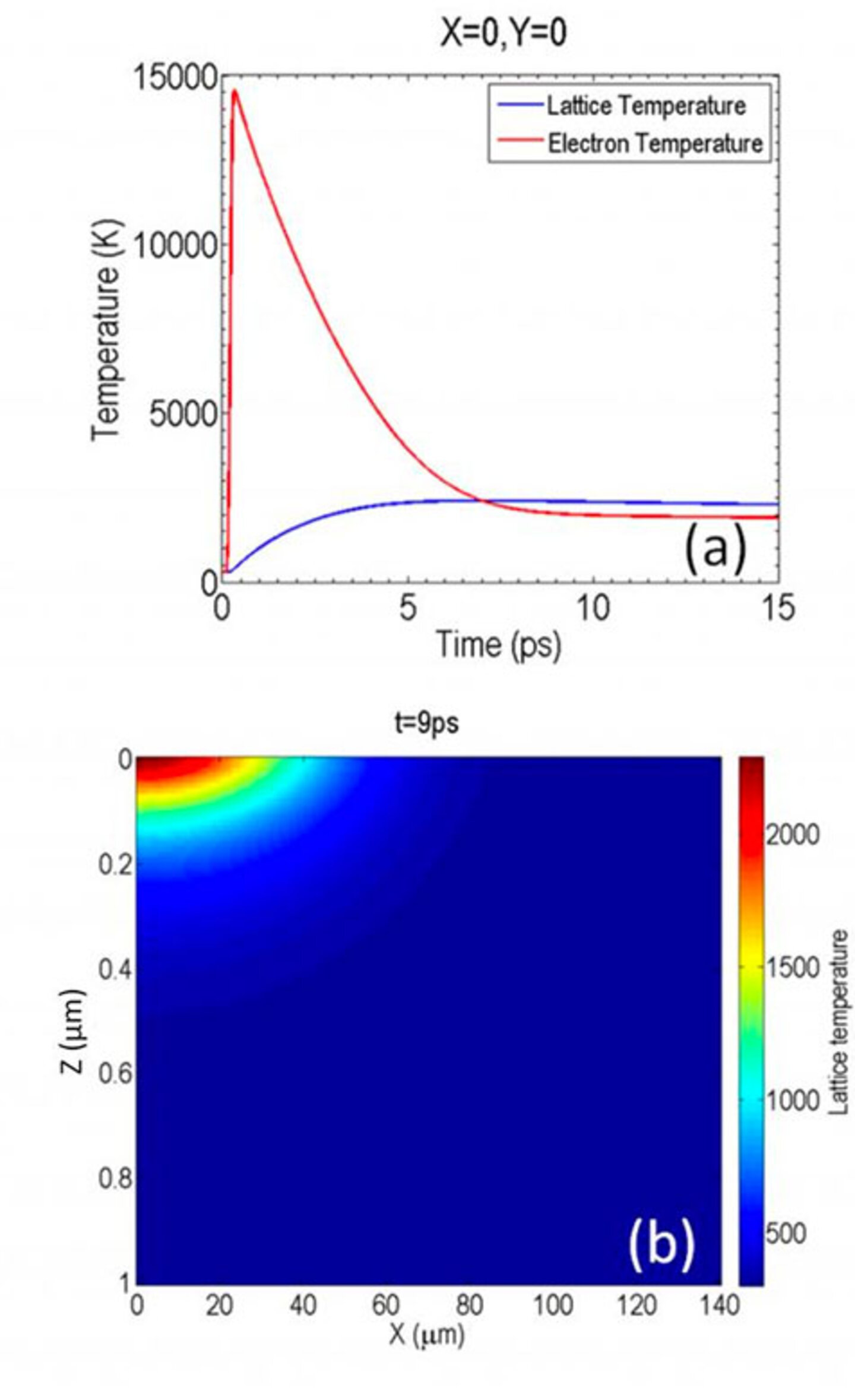
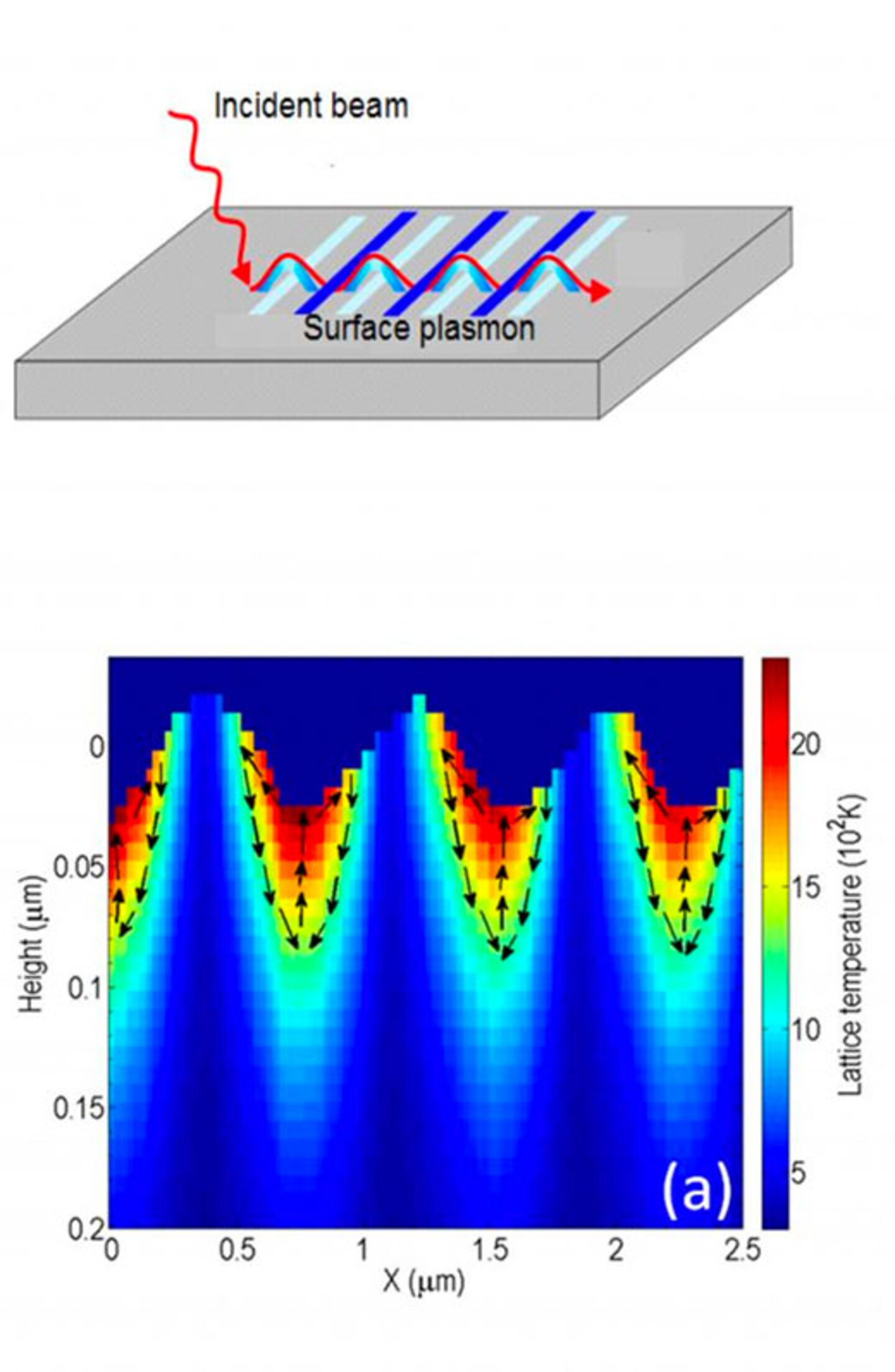
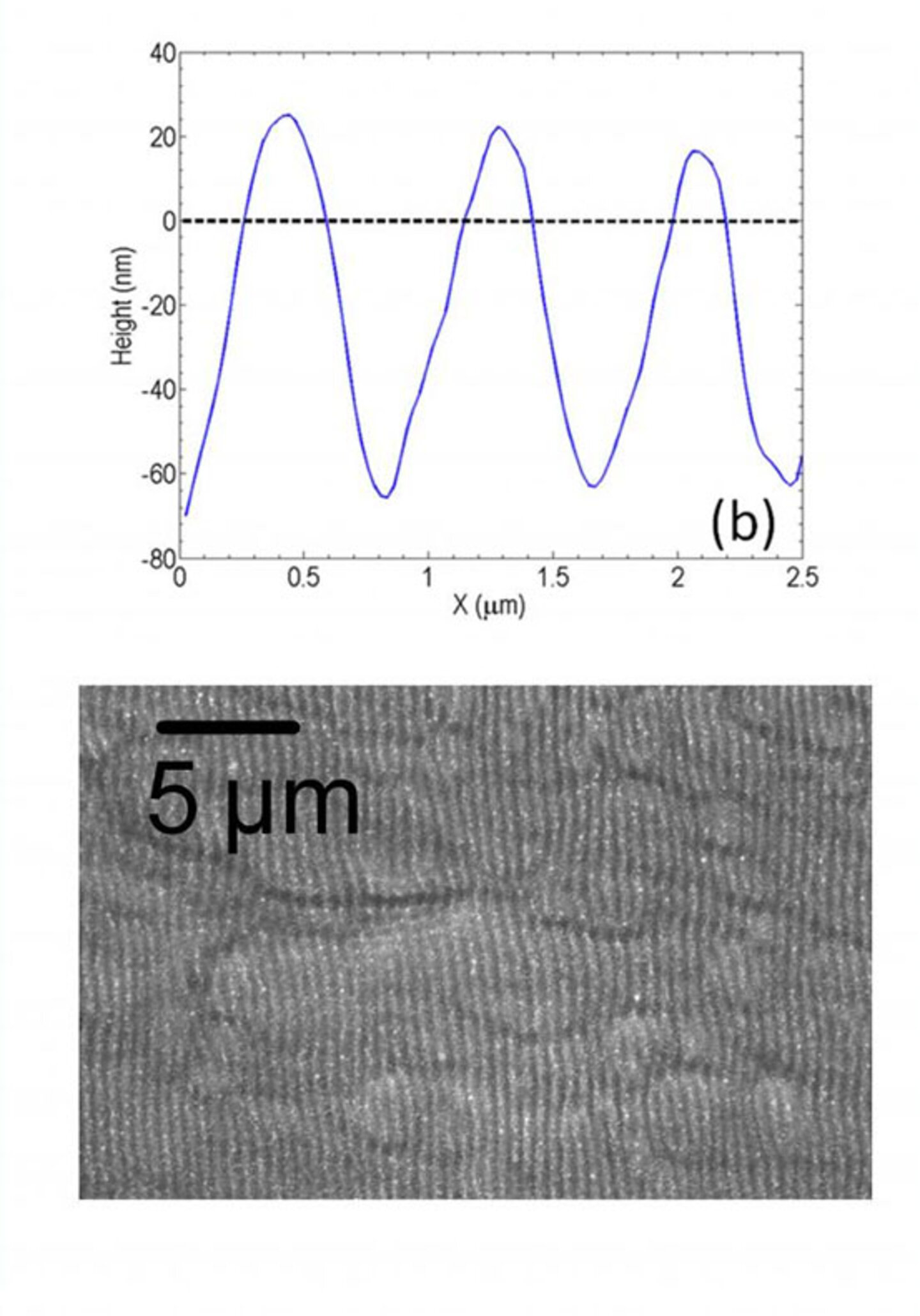
Beyond understanding gained from experimental work, the LaSER Lab under the Center for Electro-Optics and Functionalized Surfaces (CEFS) is working in collaboration with the Institute of Electronic Structure and Laser Foundation for Research and Technology - Hellas (IESL-FORTH) in Greece to develop a predictive theoretical model of the formation of self-organized micro/nanostructures formed through femtosecond laser interactions with surfaces.
Laser - Plasmon Interference
Elastoplastic Effects
Energy Dynamics